Landscape Synergy
Unlock the Power of Tree Pruning: Boosting Lawn Health in Austin, TX
Certified Arborist
|
February 15, 2026
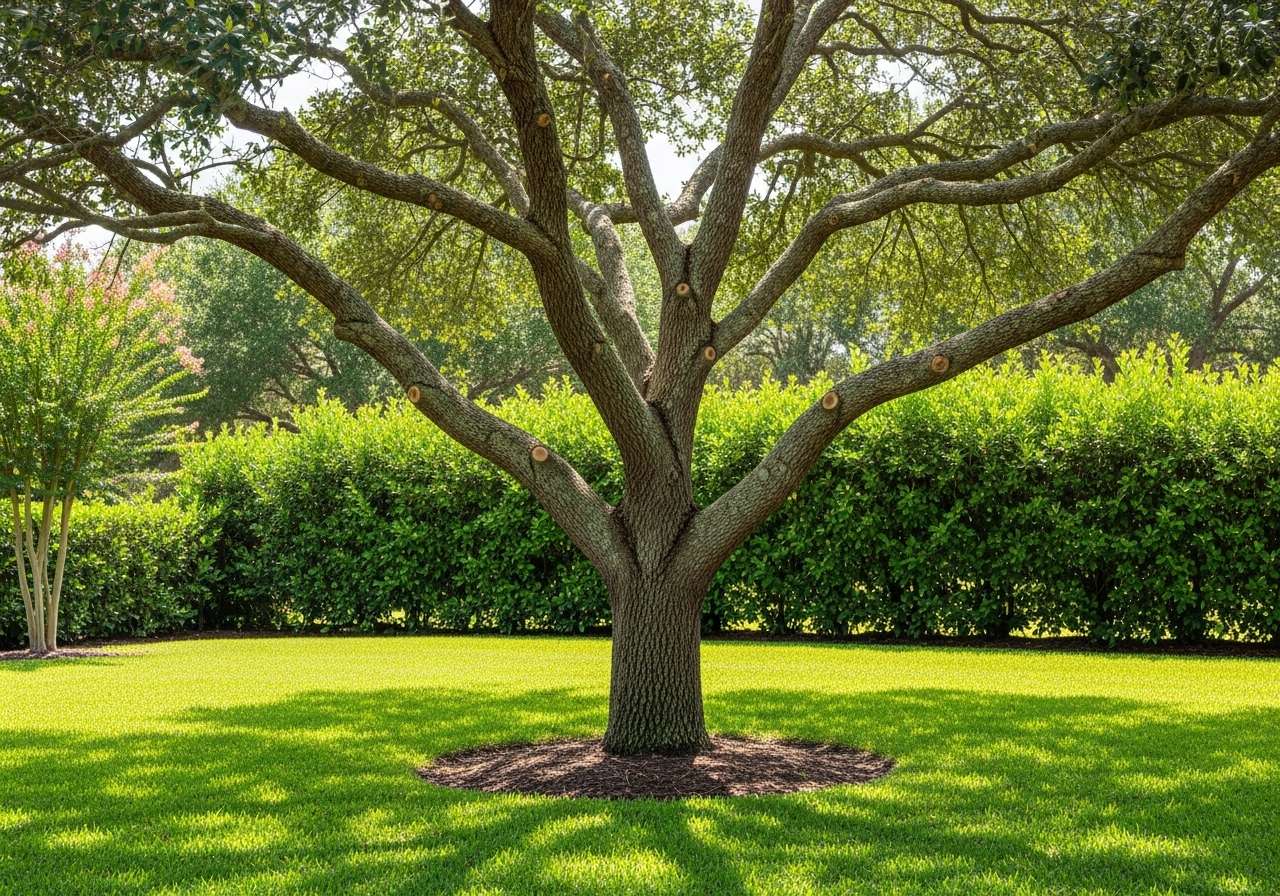
One of the most common complaints we hear from homeowners in Austin is: "I can't get grass to grow under my oak tree."
It is a frustrating cycle. You lay down expensive sod, water it religiously, and fertilize it perfectly, only to watch it thin out, turn yellow, and eventually fade into bare dirt by late summer. The culprit isn't your watering schedule; it's the massive canopy towering above it.
While trees and turfgrass are forced to share the same yard, in nature, they are fierce competitors. Fortunately, strategic, professional tree pruning can bridge the gap, allowing you to maintain a magnificent shade tree and a lush, healthy lawn. Here is how structural pruning unlocks your lawn's potential.
The number one reason grass dies under mature trees is a lack of sunlight. Even shade-tolerant grasses common in Texas, like St. Augustine and certain Zoysia varieties, require a minimum of 4 to 6 hours of direct or heavily dappled sunlight per day to photosynthesize effectively. Bermuda grass requires even more.
An unmaintained tree canopy acts like a dense umbrella. By performing a technique known as canopy thinning, an arborist selectively removes interior branches. This process:
A thick, overgrown canopy traps humidity and stagnant air near the ground. During the humid Austin springs and falls, this creates the perfect microclimate for fungal diseases to ravage your lawn.
"Brown Patch (Rhizoctonia) and Take-All Root Rot thrive in areas of the lawn that remain perpetually damp and shaded due to poor air circulation from low-hanging tree branches."
By "raising the canopy" (removing the lowest limbs of the tree) and thinning the interior, you allow the wind to sweep across your yard. This dries out the morning dew faster, drastically reducing the risk of fungal outbreaks in your turf.
Stop wasting money on sod that won't survive. Let our ISA Certified Arborists open up your tree's canopy so your grass can finally breathe.
Call (512) 641-1237 for a Canopy AssessmentWhen a tree’s canopy is too dense, it intercepts a massive amount of rainfall. The water hits the top of the leaves and evaporates back into the atmosphere before it ever reaches the soil below. This phenomenon is known as "canopy interception."
A properly pruned tree allows rainwater to pass through the branches and soak into the root zone of the grass. Furthermore, a tree that has been professionally pruned and deadwooded uses water more efficiently, meaning it won't have to steal quite as much moisture from the surrounding turfgrass during Austin's brutal summer droughts.
Trees and grass have vastly different nutrient requirements. When a tree is overgrown and stressed, its shallow feeder roots will aggressively pull nitrogen and water from the top few inches of soil—exactly where your grass roots live.
By combining regular canopy pruning with Deep Root Fertilization, we can inject nutrients 8 to 12 inches below the surface. This feeds the tree deep underground, encouraging the tree roots to dive downward, thereby leaving the topsoil nutrients available exclusively for your lawn.
Achieving a healthy balance between trees and turf requires expertise. It is absolutely critical not to "top" the tree or remove too much foliage at once, which will starve the tree and expose the bark to severe sunscald.
If your yard is struggling, the solution usually requires looking up, not down. Contact the experts at Best Quality Tree Lawn Service serving Austin, West Lake Hills, and the surrounding areas. We can assess your landscape and perform the precise, structural pruning needed to ensure your entire property thrives.
Schedule a professional pruning service today to improve your tree's structure and save your lawn.
Get a Free Pruning Estimate