Young Tree Training
Investing in structure early saves money later. We establish a central leader and strong scaffolding branches for saplings.
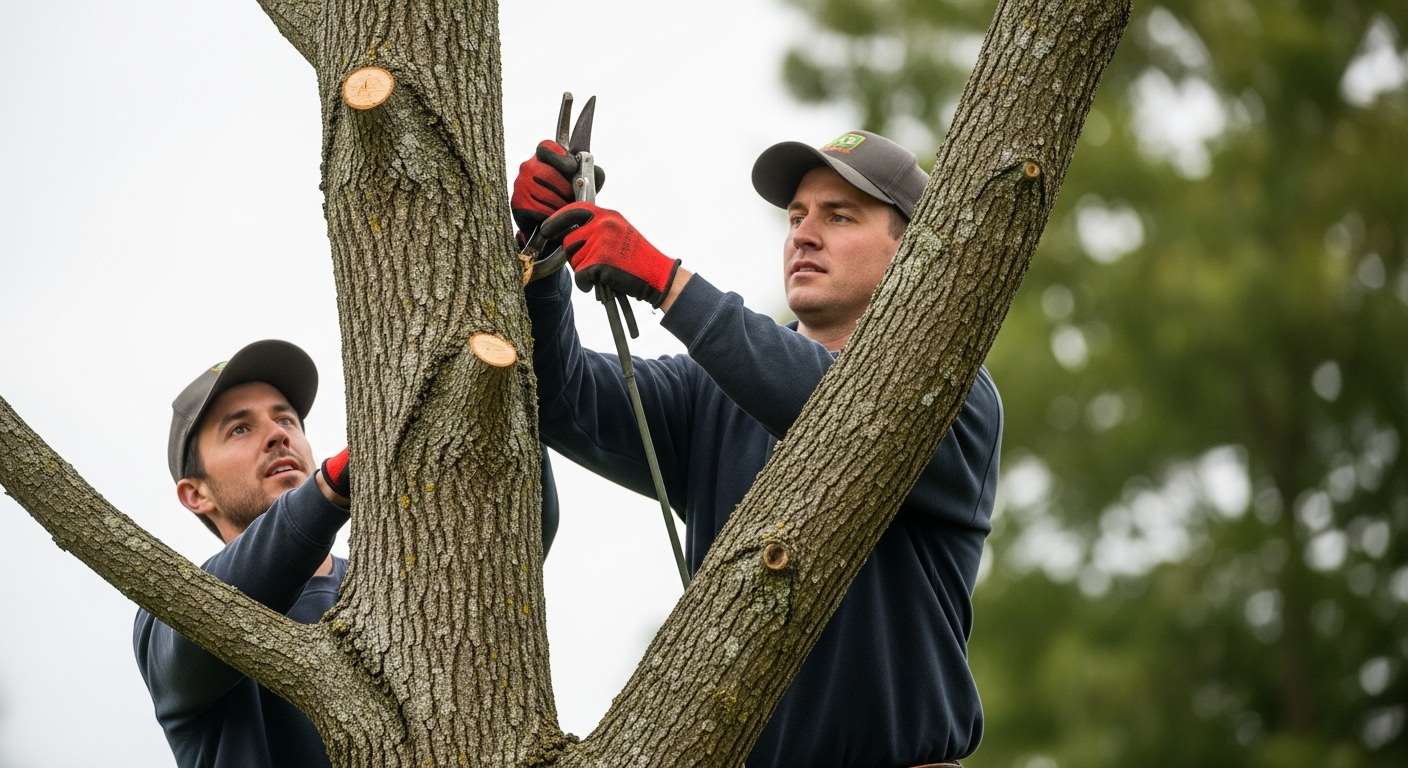
Pruning is preventative medicine for your trees. We correct growth defects, remove disease vectors, and improve structural stability to ensure your trees stand strong for decades.
While "trimming" focuses on aesthetics, pruning is a biological intervention. Every cut changes how a tree grows. Improper cuts can introduce decay or pests. We use ISA-standard techniques to remove specific branches that are rubbing, competing, or diseased, directing the tree's energy into healthy growth.
"Topping" (cutting the top off a tree) is harmful and unprofessional. It leads to weak, rapid growth and eventual heart rot. We practice crown reduction—a safe alternative that respects the tree's natural form.
Look for these structural defects that can lead to failure if left uncorrected.
Deep "V" unions often have included bark, making them weak points that split easily in high winds.
Branches that rub against each other create wounds where insects and fungal diseases can enter.
Brittle, leafless branches are hazardous "widowmakers" and can harbor pests that spread to healthy wood.
Fast-growing, vertical shoots on limbs suck energy from the tree and are structurally weak.
Investing in structure early saves money later. We establish a central leader and strong scaffolding branches for saplings.
Correcting trees damaged by storms or previous bad topping. We carefully select new leaders to restore a natural form over time.
Selectively removing inner branches to increase airflow and light penetration, reducing the risk of windthrow during storms.
Amateurs often tear bark when cutting limbs, creating large wounds. We follow the industry-standard 3-cut method to ensure rapid healing.
A cut on the bottom of the branch, a few inches out. This stops the bark from peeling down the trunk.
A top cut further out to remove the bulk of the weight. The limb falls cleanly without tearing.
The final precision cut at the branch collar, leaving the tree's natural healing zone intact.
In Central Texas, pruning Oaks requires strict safety measures.
We avoid pruning Oaks from February to June when the disease vector beetles are most active, unless it's an emergency.
We paint EVERY cut on Oaks immediately with wound dressing. We also sanitize our tools between trees to prevent cross-contamination.
Pricing depends on tree size, accessibility, and density.
Structural training for saplings and small ornamental trees.
Deadwooding and canopy cleaning for large Oaks/Elms.
Complex corrective work for storm-damaged or topped trees.
*Includes debris cleanup and haul-away.
When done correctly, no. Pruning removes inefficient or diseased parts, allowing the tree to allocate energy to healthy growth. However, over-pruning (removing more than 25% of foliage) can be harmful.
Only on Oak trees, as required by local ordinance to prevent Oak Wilt. For other species, it is generally better to let the tree seal the wound naturally without paint, which can trap moisture and decay.
Late winter (dormancy) is ideal for most structural pruning. Deadwood can be removed safely at any time of year. Avoid pruning during the spring flush of new growth.