Safety & Removal
5 Signs Your Tree is Dangerous and Needs Immediate Removal in Austin, TX
Expert Arborist
|
February 15, 2026
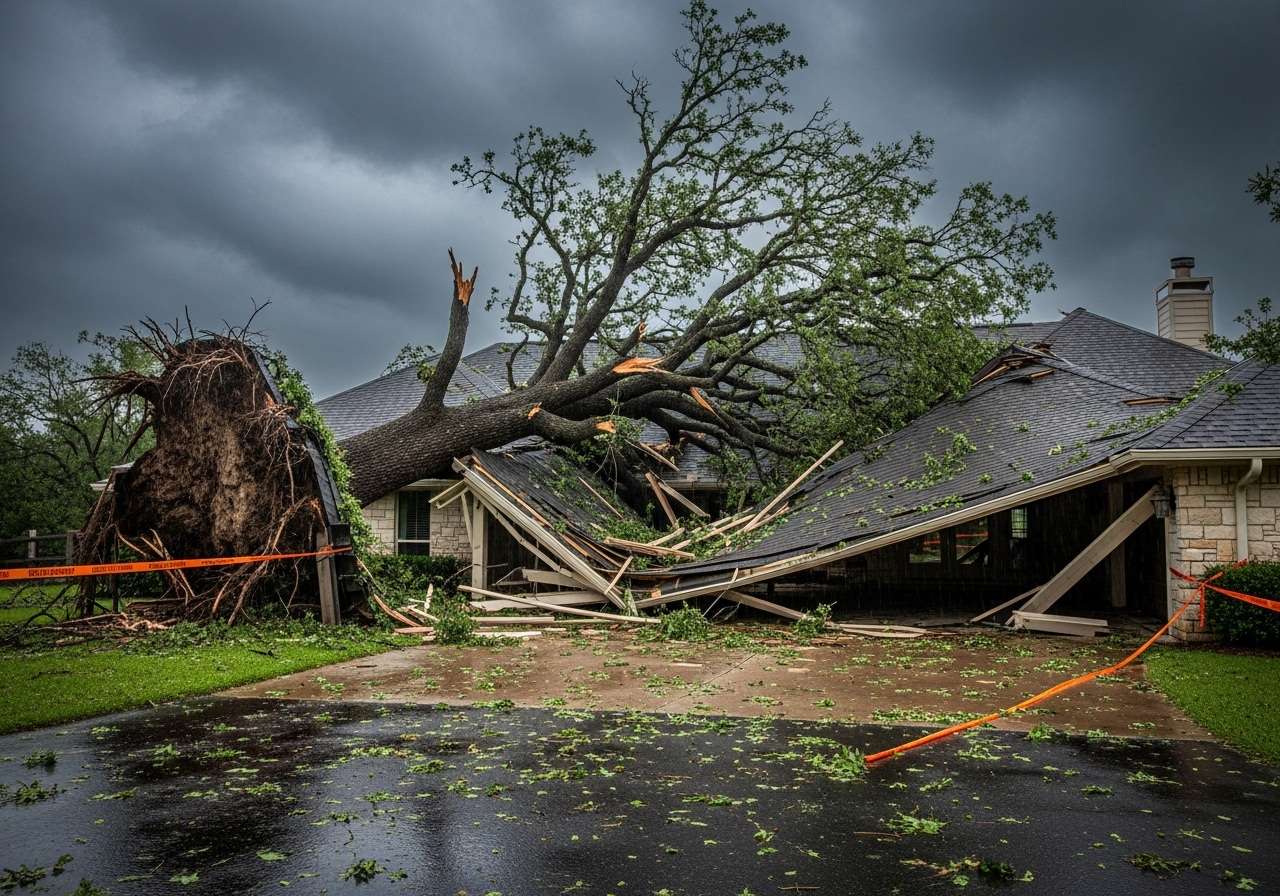
As a homeowner in Austin, TX, you know that our weather is anything but predictable. From brutal summer droughts to sudden winter ice storms, Central Texas trees take a beating. While mature trees add massive value and beauty to your property, a compromised tree is a ticking time bomb.
Knowing when a tree shifts from being a beautiful asset to a dangerous liability can save your home, your car, and potentially your life. Here are the 5 undeniable signs that your tree is dangerous and requires immediate professional removal.
It is normal for trees to shed small twigs, but large, leafless branches clinging to the upper canopy are a severe hazard. In the forestry industry, we call these large, suspended dead branches "widowmakers." They can snap and fall silently on a perfectly calm day.
If you notice that a significant portion of your tree’s canopy (more than 25%) has failed to leaf out during the spring, or if large sections of bark are peeling off high branches, the tree is in severe decline. While minor deadwooding can save a mostly healthy tree, a canopy dominated by dead branches indicates the entire tree is likely dying and needs to be removed before gravity takes over.
The trunk is the structural pillar of your tree. Vertical cracks or deep cavities are massive red flags. Following the freezing temperatures common in Austin winters, trees can suffer from "frost cracking." Furthermore, trees with multiple trunks (co-dominant stems) often develop a "V-shaped" crotch.
"Trees with deep V-shaped crotches often suffer from included bark—a weak structural flaw that makes the tree highly susceptible to splitting right down the middle during high winds."
If you can see light through a crack, or if the split extends deep into the heartwood, the structural integrity is gone. No amount of cabling or bracing can fix a severely split main trunk; removal is the only safe option.
Trees naturally lean as they grow toward sunlight. A gradual lean over many years is usually fine. However, a sudden lean that occurs after a major storm or heavy rainfall is a dire emergency.
Austin is famous for its heavy "Blackland Prairie" clay soil in the East and shallow limestone in the West. When the ground gets saturated, heavy winds can literally pull the root plate out of the soil. Look at the base of the tree opposite the lean. If you see cracked soil or exposed roots lifting out of the ground (root heave), the tree has lost its anchor. It is actively failing and needs to be taken down immediately.
Don't wait for the next storm. Our ISA Certified Arborists provide fast, accurate risk assessments in Austin, West Lake Hills, Lakeway, and beyond.
Call (512) 641-1237 for an InspectionMushrooms growing on your lawn are usually harmless. However, mushrooms or fungal "conks" growing directly on the trunk or exposed root flares of your tree are a massive warning sign.
Fungi like *Armillaria* (Oak Root rot) or *Ganoderma* feed on decaying wood. If you see these growing at the base of your tree, it means the interior wood—the very structure holding the tree up—is rotting away from the inside out. A tree can look perfectly green and healthy on the outside while being entirely hollow and structurally bankrupt on the inside.
Central Texas is notorious for ice storms that load massive weight onto oak and elm canopies. If your tree lost a significant portion of its crown (more than 50%) in a past storm, or if it was struck by lightning, it may never recover.
A tree that has been severely maimed will often respond with rapid, weak growth called "water sprouts." These new branches are poorly attached and highly prone to breaking in the next storm. If the tree is unbalanced and structurally ruined, it is much safer to remove it and plant a healthy native replacement.
Evaluating tree risk is not a DIY job. Removing a dangerous tree, especially one near your home, power lines, or driveway, requires advanced rigging, cranes, and an understanding of physics. At Best Quality Tree Lawn Service, we specialize in technical, zero-impact removals in Austin and surrounding areas like Travis Heights, Lakeway, and Onion Creek.
If you spot any of these 5 signs, do not wait until the next windstorm. Contact us today to schedule a comprehensive assessment.
We offer 24/7 emergency response for hazardous trees. Fully licensed and insured to protect your property.
Dispatch Crew: (512) 641-1237