Static Cabling
Installation of Extra-High-Strength (EHS) steel cables. Best for rigid support of compromised crotches.
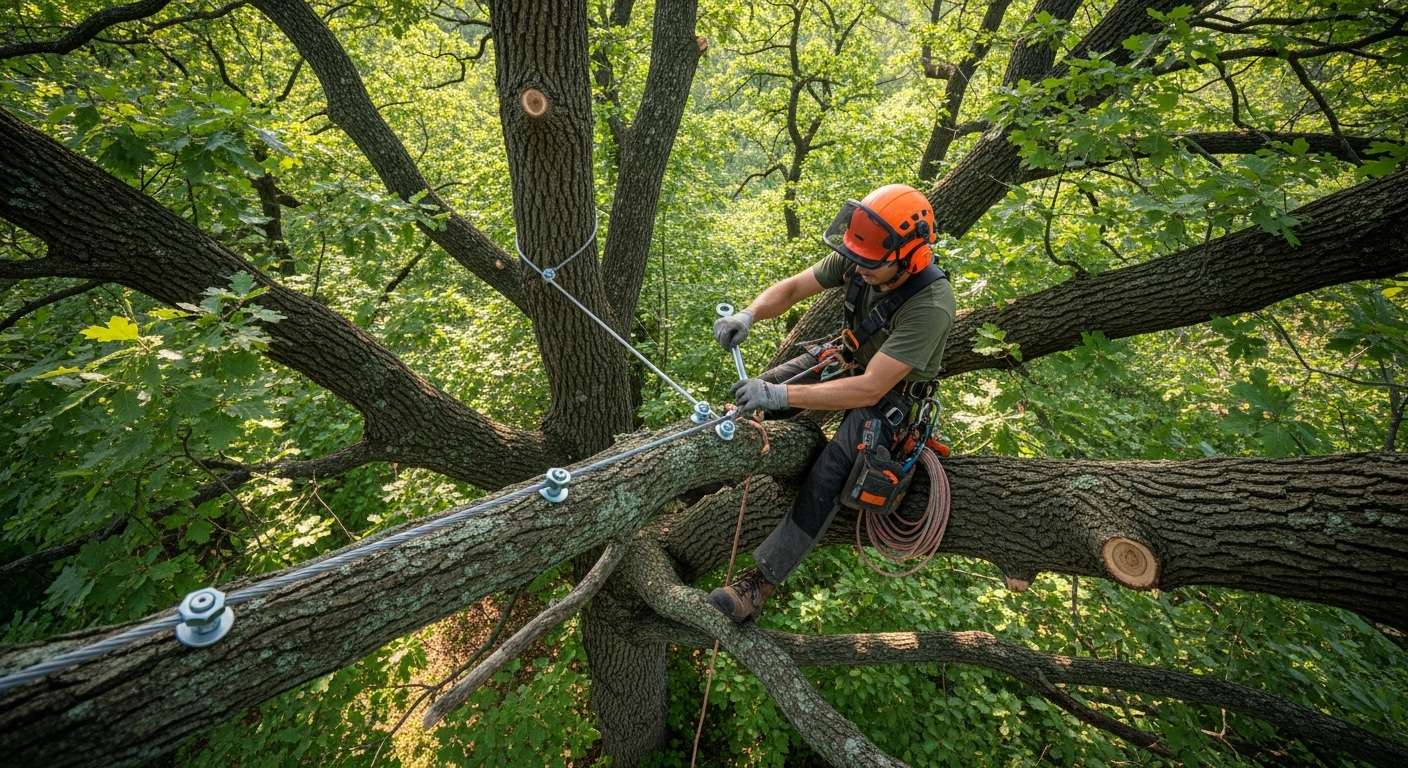
Protect your legacy trees from splitting during storms. Our professional cabling and bracing systems provide the structural reinforcement weak limbs need to survive.
Many mature trees develop structural defects like "V-crotches" (codominant stems) where two trunks compete for dominance. This union is weak and prone to splitting in high winds. Instead of removing a valuable tree, we install high-strength steel cables high in the canopy to limit movement and share the load between stems.
Static (Steel): Rigid support for trees with existing cracks or heavy leans. Dynamic (Synthetic): Flexible ropes (like the Cobra system) that allow trees to sway and build their own strength while catching them during extreme gusts.
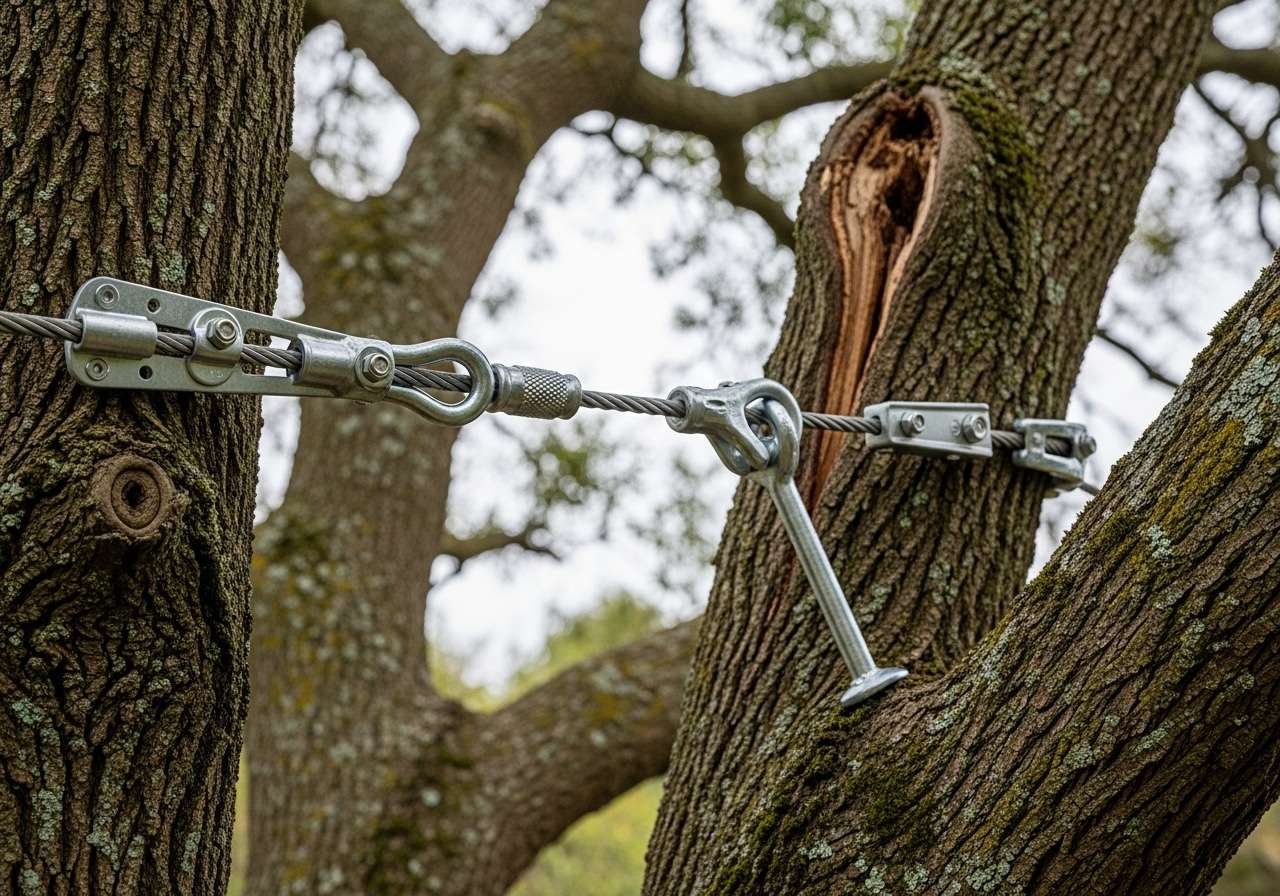
Look for these structural defects that indicate a tree is at risk of failure.
Tight "V" crotches often have included bark (ingrown bark) that prevents the stems from fusing, creating a weak point.
Visible vertical cracks below a union are a sign the tree is already splitting apart under its own weight.
Long, heavy branches extending over a roof or driveway may need support to prevent gravity failure.
Trees with 3+ main trunks from the same base are prone to splitting outward as they grow larger and heavier.
Installation of Extra-High-Strength (EHS) steel cables. Best for rigid support of compromised crotches.
Non-invasive synthetic ropes (like Cobra) that expand as the tree grows. No drilling required.
Threaded steel rods inserted through a split trunk to bolt it back together. Often used in combination with cabling.
We calculate the load and angles to determine the exact placement (typically 2/3 up the tree).
For steel systems, we drill small pilot holes through the wood to install heavy-duty eye bolts.
The cable is attached and properly terminated with thimbles and wraps to prevent fraying.
We apply just enough tension to take the slack out, ensuring the cable engages when the wind blows.
Hardware and installation included. Much cheaper than removal!
One steel cable installed. Good for a simple V-crotch.
Per system. Cobra/Boa synthetic rope. Includes growth expansion loop.
Per rod. Drill and bolt installation for split trunks.
*Complex multi-cable systems quoted onsite.
When installed correctly by a professional, the damage is negligible. The tree creates new wood (compartmentalization) around the bolts, effectively sealing them in. This minor wound is a small price to pay to prevent the catastrophic failure of the entire tree.
High-strength steel cables can last 20+ years. Dynamic synthetic systems (ropes) typically last 8-12 years due to UV exposure. We recommend an inspection every 2 years to check tension and hardware integrity.
Cabling significantly reduces the risk of failure, but nature is unpredictable. No system can guarantee a tree will survive a tornado or massive ice storm. However, it is the most effective industry-standard method for extending the life of structurally comprised trees.