Manual Picking
Best for aesthetics. We physically remove up to 95% of moss balls by hand or pole. The results are instant, restoring the clean lines of your tree immediately.
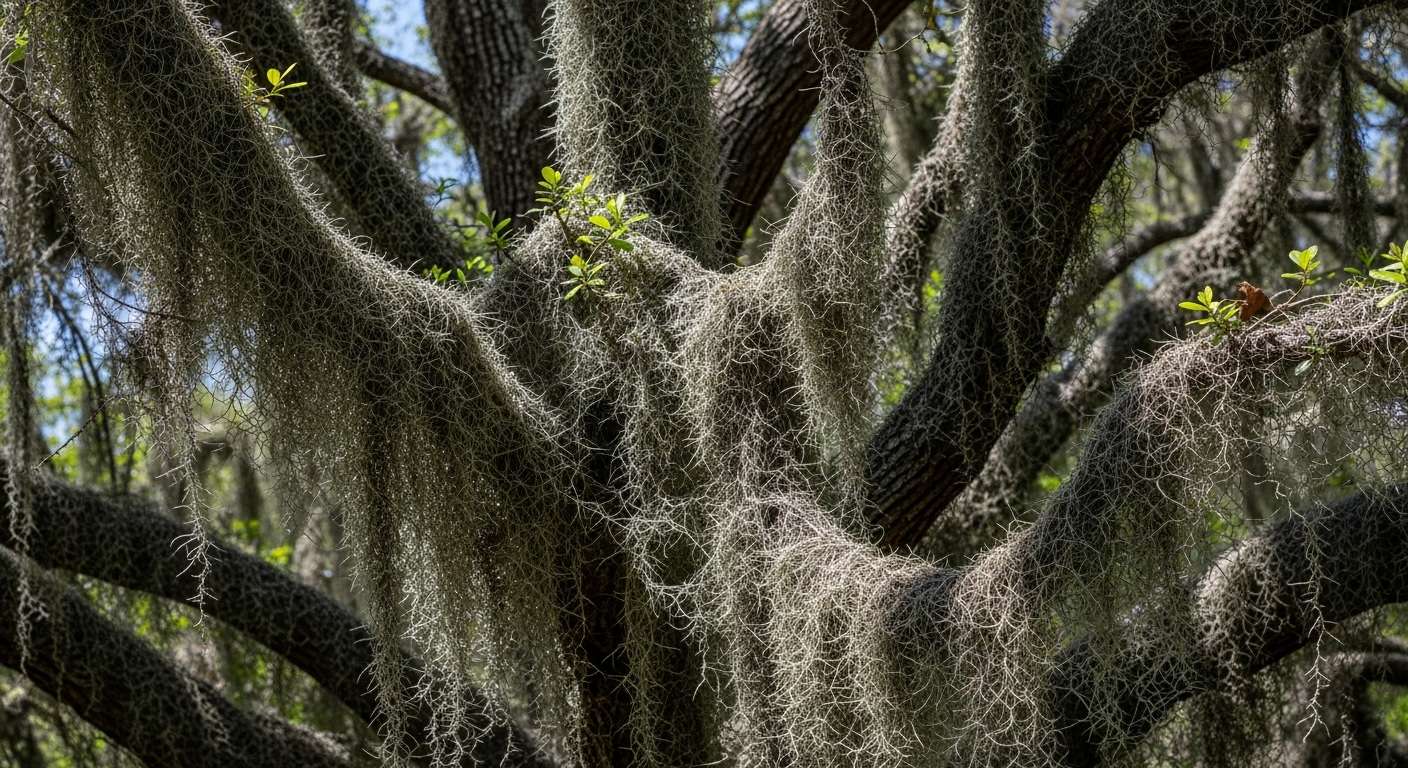
While not a parasite, Ball Moss can suffocate your lower branches and ruin your curb appeal. We safely remove infestations to let your Live Oaks breathe again.
Ball Moss (*Tillandsia recurvata*) is an epiphyte, meaning it pulls moisture from the air, not the tree. However, heavy infestations block sunlight from interior branches, causing "shading out" and dieback.
When wet, a large clump of moss acts like a sponge, adding significant weight to weak branches. During storms, this extra load causes limbs to snap that would otherwise survive.
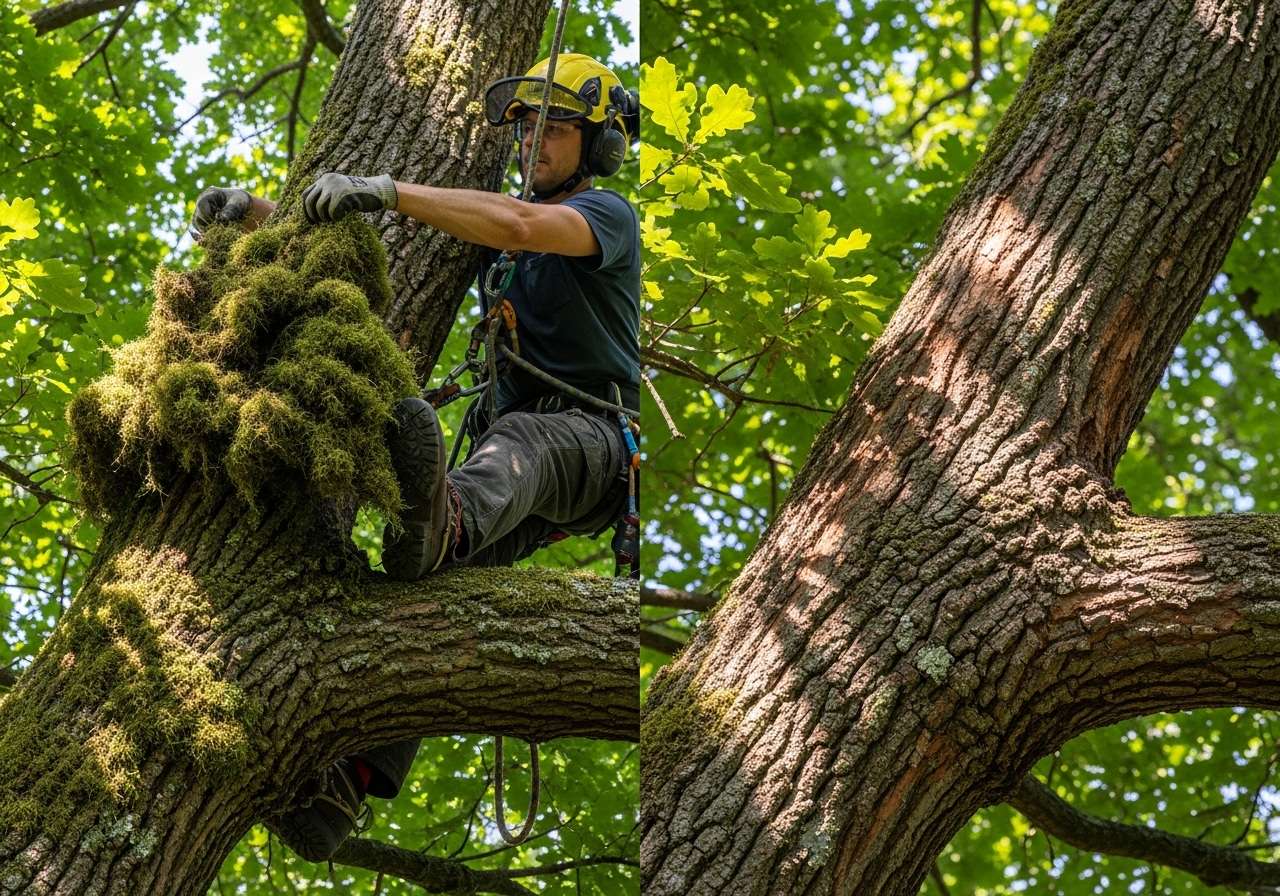
Best for aesthetics. We physically remove up to 95% of moss balls by hand or pole. The results are instant, restoring the clean lines of your tree immediately.
For heavy infestations. We use a baking soda or copper-based fungicide spray. The moss dies within weeks and falls off naturally over 6-12 months.
Ball moss loves dead branches. By pruning out the dead interior wood, we remove the primary anchor points for the infestation.
We determine if the moss is cosmetic or causing branch dieback.
We remove dead interior limbs where moss clusters most heavily.
We hand-pick accessible moss or apply treatment to the canopy.
Thousands of moss balls will drop. We rake and haul them all away.
Invest in the beauty and airflow of your property.
Removing deadwood (primary moss habitat) only.
Per tree. Intensive hand labor for instant results.
Per tree. Best for large canopies where picking is impossible.
*Pricing depends on tree size and infestation density.
Technically, no. It is an epiphyte, not a parasite, so it doesn't "eat" the tree. However, heavy infestations shade out lower limbs, causing them to die from lack of sunlight.
Eventually, yes. The spores are airborne. However, thinning the canopy to increase airflow creates a drier environment that makes it much harder for new moss to establish.
Generally, yes. We cover sensitive plants. Baking soda sprays are harmless. Copper sprays require more care, but we manage the drift to ensure your landscape is protected.